

『IFM Magnetic Flow Meter Installation: Ensuring Proper Grounding and Straight Runs』Related information(v cone flow meter|rotary gas meter|gallon meter|gear meter|metal tube rotameter|glass tube rotameter|nutating disk meter|transit time ultrasonic flow meter|wedge flow meter|pd meters|hydraulic flow meter|ultrasonic water flow meter|water flow meter|air flow meter|magnetic water flow meter|oxygen flow meter|gas flow meter|argon flow meter|air velocity meter|gasoline flow meter|fuel flow meter|ultrasonic water meter|digital water meter|nitrogen flow meter|solid flow meter|Oxygen tank flow meter|digital water flow meter|diesel fuel flow meter|steam flow meter|02 flow meter|compressed air flow meter|oil flow meter|liquid flow meter)

IFM Magnetic Flow Meter Installation: Ensuring Proper Grounding and Straight Runs
Quick Answer: Proper grounding and adequate straight pipe runs are non-negotiable for any magnetic flow meter to deliver stable, repeatable readings. Without them you will see drifting zeros, noisy signals, and measurement errors exceeding 5%. Silver Automation Instruments follows the same strict installation rules as IFM and other leading brands, and this guide explains exactly what your team needs to check before commissioning.
Why Mag Meter Grounding Must Be Right the First Time
A magnetic flow meter measures the voltage generated when a conductive fluid moves through a magnetic field. That voltage signal is tiny, often just a few microvolts. Any stray electrical noise in the pipe system will corrupt the signal. The meter body and the fluid must share the same electrical potential as the earth reference of the transmitter. That is why grounding is not a suggestion. It is a hard requirement. If your fluid has low conductivity (below 20 µS/cm), grounding becomes even more critical because the signal is weaker. In practice, we have seen a demineralized water line read 30% high just because the installer skipped the ground strap. The fix took ten minutes once the operator checked the bonding.
Straight Pipe Runs: The Numbers That Matter
A magnetic flow meter needs a fully developed flow profile to measure accurately. Swirl, asymmetry, and velocity distortion caused by elbows, valves, or pumps will shift the calibration. The rule we give to every installer is simple: upstream straight run of 10 pipe diameters and downstream of 5 pipe diameters. But here is the thing. Not every site has that much real estate. For DN15 to DN40 mag meters on clean water, we have tested 5D upstream and 2D downstream without noticeable error, provided the upstream disturbance is a single 90-degree elbow in the same plane. For larger lines DN80 and above, an inline reducer or a partially open butterfly valve close to the meter will always cause trouble. One paint manufacturer in Southeast Asia was seeing flow deviations of 4 percent on a DN100 solvent line. After we moved the meter 8D farther from the pump outlet, the reading locked to within 0.5 percent of the weigh scale reference.
Grounding Rings, Grounding Electrodes, and Earth Straps
Your grounding method depends entirely on the pipe material and liner. On a bare metal pipe with good electrical continuity, you can often bond the meter directly to the pipe flanges with a copper strap. But when the pipe is lined with rubber, PTFE, or is made of plastic, the process fluid is electrically isolated from the earth. In that case you must install grounding rings between the flanges. These rings poke into the fluid and connect to the earth terminal on the meter body. Some meters, including our SIL-8000 series, offer built-in grounding electrodes as a compact alternative. The key number to check after installation is the resistance between the meter earth terminal and the local plant ground grid. It must read below 10 ohms. We ship every Silver Instruments mag meter with a stainless steel ground strap and clear connection diagrams. If you are ordering for a PVC or HDPE pipeline, tell our sales team you need the grounding ring kit. We include the correct ring material (316L, Hastelloy C, or titanium) based on your fluid.
What Happens When You Ignore These Rules
We have seen this on customer sites many times. The 4-20 mA output jumps, the flow totalizer drifts, and the control room gets false a
Silver Instruments Mag Meter Models and Installation Support
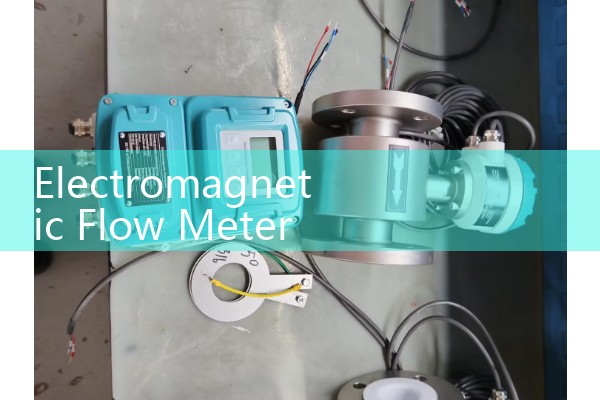
Silver Automation Instruments supplies magnetic flow meters from DN6 up to DN2000. The standard accuracy is 0.5 percent of reading. You can choose from PTFE, polyurethane, or hard rubber liners. Electrode options include 316L, Hastelloy B, Hastelloy C, titanium, and tantalum. Output signals are 4-20 mA HART, RS485 Modbus, and optional pulse or frequency. The housing ratings go up to IP68 and ATEX Zone 1 is available for hazardous areas. Every meter leaves our factory with a calibration certificate traceable to national standards. The installation manual covers grounding logic, straight run tables, and torque values for flange bolts. We can also review your pipe layout drawing before you order. Send us the isometric sketch and we will mark the recommended meter location. This pre-sales support has saved our customers from expensive rework in regions like Latin America and the Middle East where site access is not always easy.
Frequently Asked Questions About Mag Meter Installation
What is the minimum straight run for a DN50 mag meter on raw water? For clean water with a steady flow, 5D upstream and 2D downstream is often enough. If there is a control valve or two elbows in different planes just ahead, extend the upstream run to 10D.
Can I use a magnetic flow meter on a metal pipe without grounding rings? Yes, if the pipe is metal, unlined, and has solid electrical bonding between flanges. But if the pipe has an internal coating or a non-conductive gasket, the fluid loses its earth reference. In that case add grounding rings or a grounding electrode.
How do I test if the grounding is effective? Measure the DC resistance between the meter body earth terminal and the plant grounding grid. A reading below 10 ohms is good. We also recommend checking the voltage between the fluid and the meter body when the pipe is full and flowing. It should be close to zero.
Does Silver Instruments offer mag meters for seawater desalination plants? We do. Seawater applications require titanium electrodes and usually a PTFE liner. We build these meters for high salinity and high pressure, and we ship them with matching grounding rings. Please provide your salinity, pressure, and flow range when you send the inquiry.
What output signals do Silver Instruments mag meters provide? The standard configuration is 4-20 mA HART plus RS485 Modbus RTU. Optional outputs include passive pulse, active frequency, and two configurable relay alarms. All outputs are galvanically isolated.
Ready to specify a stable, well-grounded flow meter for your process? Send us your pipe size (DN), fluid type, conductivity (µS/cm), temperature, and pressure. We will prepare a quote with the correct grounding accessories and straight run recommendations. Email: [email protected] | Tel: +86-25-68650347 | Whatsapp: +86-25-52155837 | WeChat: +86 15365082610
 Hot Blog
 Related AD