

『Jet Fuel Flow Meter DN50: Choosing the Right Setup for Your Piping Needs』Related information(v cone flow meter|rotary gas meter|gallon meter|gear meter|metal tube rotameter|glass tube rotameter|nutating disk meter|transit time ultrasonic flow meter|wedge flow meter|pd meters|hydraulic flow meter|ultrasonic water flow meter|water flow meter|air flow meter|magnetic water flow meter|oxygen flow meter|gas flow meter|argon flow meter|air velocity meter|gasoline flow meter|fuel flow meter|ultrasonic water meter|digital water meter|nitrogen flow meter|solid flow meter|Oxygen tank flow meter|digital water flow meter|diesel fuel flow meter|steam flow meter|02 flow meter|compressed air flow meter|oil flow meter|liquid flow meter)
Jet Fuel Flow Meter DN50: Choosing the Right Setup for Your Piping Needs
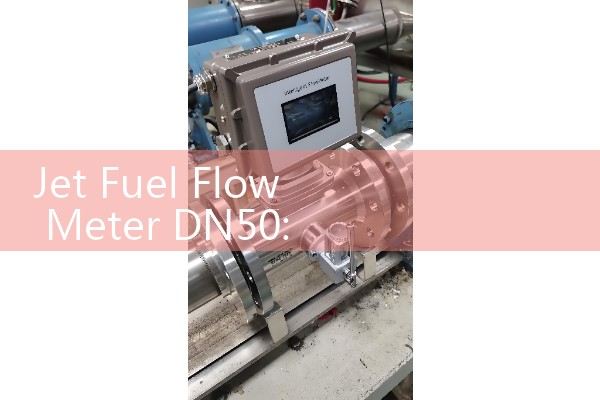
Quick Answer: For a 2-inch (DN50) jet fuel line, a Coriolis mass flow meter with 4-20 mA HART output, stainless steel wetted parts, and ATEX Zone 1 certification gives you direct mass flow (kg/h), density, and temperature from one device. Install it with at least 10 DN straight run upstream and 5 DN downstream. If you handle custody transfer, add a PT100 and follow API MPMS Chapter 5.6.
Why DN50 Jet Fuel Meters Need Special Attention
Jet A-1 and JP-8 fuels are not simple liquids. Their viscosity changes with temperature. A meter that works fine in a 30 °C afternoon in Dubai can drift when the same line cools down to 0 °C at night. DN50 lines are common in hydrant pit refueling trucks, into-plane fueling hoses, and terminal loading arms. Flow rates in these lines often sit between 200 and 800 litres per minute. That is roughly 150 to 600 kg/min depending on fuel temperature and density.
Many engineers default to a turbine meter for this size. Turbine meters are compact and cost less upfront. But jet fuel has poor lubricity. Turbine bearings wear faster than you expect. We have replaced turbine meters after only 18 months in a fuel depot in Jakarta. The customer switched to a Coriolis meter and eliminated bearing wear completely. The meter paid for itself within three years just from reduced maintenance downtime.
Coriolis vs. Other Technologies for Jet Fuel DN50
Silver Automation Instruments supplies several meter types for DN50 jet fuel lines. Each has a place. Here is what we see on real installations.
Coriolis mass flow meters measure mass directly. No need for separate density compensation. Our SILVER CORI-MASS I series with DN50 connections delivers ±0.1% mass flow accuracy and ±0.5 kg/m³ density. You get mass flow in kg/h, volume flow in L/min, temperature in °C, and density all on one display. Outputs include 4-20 mA HART, Modbus RTU, and pulse. This is a solid choice for custody transfer when paired with a PT100 and flow computer. Install the sensor in a low-point drain to avoid trapped air. One customer in Saudi Arabia uses this setup on a 16-bay truck loading rack and achieves a meter factor below 1.0005 every quarter.
Oval gear flow meters are another option. They give you pulse output proportional to volume. Good repeatability, no straight pipe needed. But jet fuel viscosity is around 1.3 cP at 20 °C. That is on the low side for oval gear meters. You need small clearances, and any debris will scratch the gears. If your fuel is filtered to 1 micron and you have a strong maintenance team, these can work. We would not recommend them for an unmanned pumping station in West Africa where filter changes happen once a year.
Ultrasonic flow meters work with clamp-on sensors. No process interruption, no pressure drop. For jet fuel, you need a high-frequency transducer pair, typically 2 MHz, because jet fuel has low acoustic impedance. Accuracy is around ±1% of reading. That is fine for inventory management but not enough for custody transfer unless you are willing to dry-calibrate the meter in place. In practice, we see ultrasonic meters on large-diameter pipeline headers, not on DN50 loading arms.
Installation Details That Affect Accuracy on DN50 Lines
The meter itself is half the job. The piping setup around it decides whether you get stable readings or constant alarms.
Straight pipe requirements. For Coriolis meters, the sensor body is immune to most flow profile disturbances, but vibration and pipeline stress matter more. Use firm pipe supports within 0.5 m of the meter flanges. For turbine meters, you need 20 DN straight upstream and 5 DN downstream on DN50 lines if you want API-compliant accuracy. That means 1 m of straight pipe before the meter. Not every skid builder leaves that much space. We often see a flow straightener being the only practical fix.
Temperature compensation. Jet fuel density drops about 0.8 kg/m³ per °C rise. If you measure volume at line temperature and want net standard volume at 15 °C, you must know the fuel temperature at the meter inlet. A PT100 installed in a thermowell 3 DN downstream of the meter gives a reliable reading without disturbing the flow profile. Connect it to the flow computer or to the meter input if your model accepts external temperature compensation. Silver Instruments Coriolis meters have a built-in PT1000 sensor inside the tube, so you get live density referenced to 15 °C directly from the transmitter.
Air elimination. Jet fuel foams easily. Entrained air causes large errors in most meter types. For turbine and oval gear met
Ex-proof and Material Considerations
Jet fuel is a flammable liquid. DN50 flow meters on a loading rack or refueling truck sit inside a Zone 1 hazardous area. You need ATEX, IECEx, or local certification. Silver Instruments Coriolis meters come with ATEX II 2G Ex db ia IIC T6 Gb certification as standard. The transmitter housing is IP67. For North American markets, Class I Division 1 Groups C and D is available. When ordering, always state the certification and gas group. A paint manufacturer in Thailand once ordered meters with Zone 2 certification for a Zone 1 area. Customs held the shipment for two weeks.
Wetted parts must be compatible. Jet fuel is not aggressive, but if your fuel contains biocides or corrosion inhibitors, check compatibility with the meter gasket. Standard material for Jet A-1 service is 316L stainless steel tubes or measuring chambers, with FKM or PTFE seals. Brass bodies are common in lower-cost meters but can form copper-nickel compounds over time. We recommend all-stainless meters for jet fuel to avoid contamination risks. An airport fuel system manager in Sydney switched to stainless oval gear meters after copper particles showed up in filter samples.
Output Signals and System Integration
Most DN50 fuel meters need to talk to a PLC, a flow computer, or a SCADA system. Silver Instruments meters give you 4-20 mA HART, pulse, and RS485 Modbus RTU as standard. HART is the most common for tank farm integration. It lets the DCS read mass flow, density, temperature, and diagnostics without extra cables. Pulse output works well for batch controllers. If you are upgrading an old loading arm that only accepts a reed switch pulse, we can supply an active pulse output module that matches the original turbine meter K-factor. This saved a terminal operator in Peru six months of panel redesign.
For remote monitoring, Modbus RTU over RS485 is simple and reliable. You can pull all process variables plus meter status flags. We have a customer in Nigeria who runs 14 Coriolis meters on a single Modbus loop to a Silver paperless recorder. The whole system draws less than 50 W, which is a big advantage when you run on generator power.
Frequently Asked Questions
What is the typical flow range for a DN50 Coriolis meter on jet fuel?
Most DN50 Coriolis meters handle 100 to 1000 kg/min. Jet fuel density at 15 °C is about 800 kg/m³, so that covers 125 to 1250 L/min. Check the pressure drop at your max flow. A twin-bent-tube meter will have about 0.5 to 1.0 bar drop at 800 L/min. Straight-tube meters have lower drop but a larger footprint.
Can I use a turbine meter for custody transfer of jet fuel?
Yes, if you follow API MPMS Chapter 5.3 for turbine meters. You will need a flow straightener, frequent proving, and a backup meter during proving. One Middle East fuel terminal runs a master meter prover with a Coriolis reference meter to prove their turbine meters every month.
Do I need a flow straightener for a Coriolis meter on a DN50 line?
No. Coriolis meters measure mass directly and do not need a developed velocity profile. You do need to eliminate pipe vibration and mechanical stress. Use two pipe supports and a flexible hose connection after the meter on truck loading skids.
How do I handle density correction for net volume billing?
Install a Coriolis meter with density output or pair a volume meter with a densitometer. Silver Instruments recommends the all-in-one approach. Our meters output net volume at base temperature (15 °C) using API Table 53B factors stored in the transmitter. You get a live standard volume pulse that goes directly into your billing system.
What certifications do your DN50 jet fuel meters carry?
ATEX, IECEx, and SIL 2 for the Coriolis series. SIL 2 allows the meter to be part of a safety shutdown loop. For marine applications, we also offer DNV and Lloyds pattern approval. Always specify the certs when you request a quote.
Need a quote for a DN50 jet fuel flow meter?
Send us your pressure (bar), temperature (°C), pipe size (DN), and flow range. Our engineers will propose a meter setup that matches your exact piping and hazard zone requirements. Reach us at https://flow-meter.com.au or search for Silver Automation Instruments.
 Hot Product
 Related AD