

『Waste Cooking Oil Flow Meter Entrained Gas Trouble Fixes』Related information(v cone flow meter|rotary gas meter|gallon meter|gear meter|metal tube rotameter|glass tube rotameter|nutating disk meter|transit time ultrasonic flow meter|wedge flow meter|pd meters|hydraulic flow meter|ultrasonic water flow meter|water flow meter|air flow meter|magnetic water flow meter|oxygen flow meter|gas flow meter|argon flow meter|air velocity meter|gasoline flow meter|fuel flow meter|ultrasonic water meter|digital water meter|nitrogen flow meter|solid flow meter|Oxygen tank flow meter|digital water flow meter|diesel fuel flow meter|steam flow meter|02 flow meter|compressed air flow meter|oil flow meter|liquid flow meter)
Waste Cooking Oil Flow Meter Entrained Gas Trouble Fixes
Quick Answer: Entrained gas in waste cooking oil causes flow meters to over-read, under-read, or output unstable signals. The most reliable fix is a combination of upstream gas separation, adequate back pressure, and a flow meter with high immunity to two-phase flow. For waste oil with up to 5% free gas, an oval gear meter with a built-in strainer and a downstream spring-loaded back pressure valve typically restores measurement repeatability to ±0.5%.
Why Entrained Gas Ruins Waste Oil Measurement
Waste cooking oil is never just oil. It contains water, food particles, detergents, and dissolved or free gas. When a positive displacement flow meter like an oval gear meter sees a gas pocket, the rotors spin faster because gas occupies volume without adding mass. A Coriolis meter in this situation may interpret the density drop as a fault and freeze the output, or worse, report a flow rate that is 20 to 40% higher than the true liquid mass flow. In a biodiesel plant, that error means you pay for phantom feedstock or you mess up your catalyst dosing ratio.
Gas enters the line from multiple sources. Suction-side leaks on gear pumps are a classic culprit. Fittings under vacuum can pull air into a return line from the fryer. If the oil sits in an open tank and cools quickly, air strips out of solution and forms bubbles. We have seen a collector in Nigeria where air ingress at a swivel joint added 8% volume error to every batch. The operator thought the meter was drifting. The real problem was a 45‑degree elbow on the pump inlet that caused a low‑pressure zone.
Real‑World Example: A Biodiesel Plant in Malaysia
Last year a customer in Johor processing 3 tonnes per hour of used palm olein could not get stable readings from his DN25 oval gear meter. The reading jumped between 2.7 and 3.4 t/h within ten seconds. Silver Instruments sent a technician with a transparent sight glass. We saw a slug flow pattern: five seconds of liquid, then a burst of froth. The root cause was two‑fold. The collection truck used compressed air to unload the waste oil into a holding tank, which aerated the oil. Then a centrifugal pump at the tank outlet reintroduced shear and created a stable emulsion. The meter was seeing alternating liquid and foam.
The Fix: Install a Gas Separator Upstream
A simple T‑shaped air eliminator with a float vent is the first line of defence. It mounts vertically on the inlet pipe about 10 pipe diameters before the flow meter. The vent line goes back to the tank or to a small catch pot. For the Johor plant, we fitted a DN40 in‑line gas separator with a 50‑micron screen to break the foam. The extra pressure drop was only 0.15 bar. After that, the oval gear meter held a steady 3.05 t/h reading with a repeatability of ±0.3%.
In processes where the oil is hot (80 to 110 °C) and the gas fraction exceeds 5%, we recommend a combined degassing vessel with a level control. The vessel gives the oil 60 seconds of residence time. Gas escapes through a top vent. The degassed oil then flows to the meter by gravity or by a positive displacement pump on the vessel outlet. This arrangement is common in European biodiesel plants. It adds roughly AUD 4,200 to the project cost but saves far more in measurement errors over a year.
Back Pressure: The Simple Trick Most Engineers Forget
Entrained gas expands when static pressure drops. If your flow meter outlets into an atmospheric tank, the gas volume at the meter outlet can be three times the volume at the inlet. This is why a back pressure valve on the meter discharge is so effective. It keeps the whole measuring chamber at a higher pressure, squeezing the gas bubbles and reducing their volume impact. We use a spring‑loaded valve set to 1.0 to 1
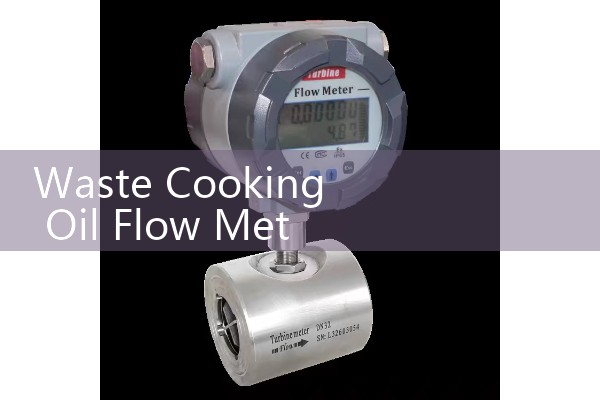
Pair the back pressure valve with a short, straight pipe run on the outlet. A vertical mounting orientation with flow from bottom to top also helps gas bubbles rise and stay out of the meter chambers. Most engineers skip this step because they copy the old installation drawing. But waste oil is not diesel. You cannot treat it like a clean fuel and expect the same results.
Choose the Right Flow Meter for Waste Cooking Oil
Oval gear meters handle waste oil up to 500 cP well. They are less affected by gas than Coriolis meters because the rotors displace a fixed volume. However, any large gas slug will still cause a spike. For crude waste oil with high solids and water, we recommend the oval gear meter with a 100‑micron strainer and a PTFE coating on the gears to resist sticky deposits. The meter should be sized for the peak flow rate, not the average. A DN25 oval gear meter from Silver Automation Instruments covers 1 to 15 t/h of waste oil. That matches most small biodiesel plants in Thailand or Guatemala.
If your process runs above 120 °C or you need mass flow for a custody transfer application, consider a Coriolis meter with an entrained gas management (EGM) function. The EGM software keeps the meter driving at high frequency even when bubbles cause resonance shifts. This allows the meter to maintain a usable flow signal up to about 3% gas by volume. Send us your maximum gas fraction, oil temperature (°C), pressure (bar), and pipe size (DN) so we can check if EGM is suitable. We have tested this with a customer in Brazil who runs a 3‑inch line at 135 °C. His Coriolis meter with EGM now holds a mass flow error under 1.2% during gas upset conditions.
Frequently Asked Questions
Q: How much gas can an oval gear meter tolerate?
In laboratory conditions, up to 1% free gas by volume causes a negligible error. Above 2%, the error increases quickly. At 5% gas, the meter can over‑read by 15 to 30%. That is why we advise a gas separator if your oil foam exceeds 2%.
Q: Can I use a Coriolis meter for waste oil with entrained air?
Yes, but only with the EGM option and only up to about 3% gas volume. Beyond that, the Coriolis meter may fault or read inaccurately. We recommend a degassing vessel upstream if your typical gas fraction is 5% or more.
Q: Why does the flow reading fluctuate even after installing a back pressure valve?
Check the valve set pressure with a gauge. If the valve is chattering, it can create pressure pulsations that the meter interprets as flow. Also, ensure the meter is not mounted at the highest point of the pipe where gas pockets collect.
Q: What pipe size and connection type do I need?
For waste cooking oil with particles, we suggest a minimum of DN15 and flanged or tri‑clamp connections. Threaded connections with small bores trap debris and clog the strainer. In a 2‑t/h line, DN25 PN16 flanges are typical.
Q: How do I order a flow meter with a gas separator kit from Silver Instruments?
Send us an email with your flow range (t/h or L/h), oil viscosity at operating temperature (cP), pipe size (DN), pressure (bar), temperature (°C), and an estimate of the gas fraction. We will propose a meter, separator, and back pressure valve sized as a single package.
Need a waste cooking oil flow meter that works even with entrapped gas? Send us your pressure (bar), temperature (°C), pipe size (DN), and flow range. Our team will recommend a meter with the right gas‑handling upgrades and a price quote within one working day.
 Hot Product
 Related AD