

_500x500.jpg)
『Flow Water Sensor Installation for Irrigation Networks』Related information(v cone flow meter|rotary gas meter|gallon meter|gear meter|metal tube rotameter|glass tube rotameter|nutating disk meter|transit time ultrasonic flow meter|wedge flow meter|pd meters|hydraulic flow meter|ultrasonic water flow meter|water flow meter|air flow meter|magnetic water flow meter|oxygen flow meter|gas flow meter|argon flow meter|air velocity meter|gasoline flow meter|fuel flow meter|ultrasonic water meter|digital water meter|nitrogen flow meter|solid flow meter|Oxygen tank flow meter|digital water flow meter|diesel fuel flow meter|steam flow meter|02 flow meter|compressed air flow meter|oil flow meter|liquid flow meter)
Flow Water Sensor Installation for Irrigation Networks
Quick Answer: Installing a flow water sensor in an irrigation network starts with selecting the right technology for your water quality and pipe size. Electromagnetic flow meters work for raw water with conductivity above 20 µS/cm, while clamp-on ultrasonic meters avoid cutting pipes. Always place the sensor in a straight pipe section with minimum 10 times pipe diameter upstream and 5 times downstream, and make sure the line stays completely full during operation.
Why Correct Sensor Placement Decides Your Readings
A flow sensor in an irrigation line does more than count cubic meters. It feeds data into dosing pumps, nutrient injection systems, and water management dashboards. If the sensor sits in the wrong spot, the numbers drift and the whole automation loop suffers. Most farm managers learn this the hard way during their first fertigation season.
Silver Instruments has walked onto sites in central Vietnam where an electromagnetic flow meter was clamped right after a 90° elbow. The turbulence created a 15 percent error at 80 m³/h. Moving the meter six pipe diameters upstream from the bend fixed the issue without replacing any hardware. The pipe was DN150 carbon steel, carrying river water with occasional silt.
In irrigation networks the water rarely stays clean. Silt, organic debris, or dissolved fertilizer changes conductivity and density. A magnetic flow meter ignores density changes and works as long as the liquid conductivity stays above the instrument threshold. A clamp-on ultrasonic meter avoids direct contact with the slurry in drip irrigation return lines. Choose based on real water samples, not a datasheet alone.
Selecting the Sensor to Match Your Water and Pipe
Start with the pipe material and pipe size. In Southeast Asia we see a lot of HDPE and uPVC in DN80 to DN300 for main distribution lines. For buried HDPE pipes, an insertion electromagnetic flow meter with a hot-tap fitting saves time and avoids draining the whole zone. Give us your pipe outer diameter, wall thickness, and material, and Silver Instruments can provide a sensor with the correct insertion length.
For concrete-lined steel pipes on older Australian farms, a full-bore magnetic flow meter with grounding rings prevents stray current errors. We delivered four DN200 electromagnetic meters to a sugarcane operation in Queensland last year. The customer sent us the water analysis showing 850 µS/cm conductivity and 2 bar nominal pressure. With those numbers we recommended a rubber-lined sensor with PTFE grounding electrodes. No more signal dropouts in the middle of the day.
Ultrasonic flow meters suit large diameters above DN250 where a full-bore magmeter becomes expensive. In the Middle East we supplied clamp-on ultrasonic sensors for a 500 mm line feeding date palm irrigation. The installation took two hours without welding or pipe cutting. The meters run on 4-20 mA HART, sending flow totals to a central PLC via RS485.
Installation Steps That Prevent Field Failures
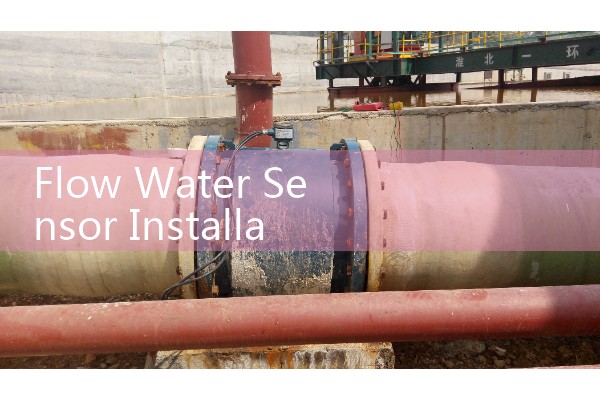
Here is the thing about installation manuals: they assume a perfect pipeline. In practice, an irrigation network has low points that trap air and vertical risers that drain when the pump stops. A flow sensor must remain completely full of water during measurement. Install it in a low horizontal section or in a vertical pipe where flow goes upward. Never put the sensor at the high point of an above-ground pipe bridge.
Most engineers skip the grounding check on plastic pipes. An electromagnetic flow meter needs a reliable zero reference. For uPVC or PE pipes, use grounding rings or electrodes on both sides of the sensor. Without this, the meter reading jumps every time lightning strikes kilometres away. One farm in Thailand lost three months of water usage records because a single grounding wire was loose.
Straight pipe runs are not a nice-to-have. For an electromagnetic sensor, the minimum is 10 pipe diameters upstream and 5 downstream. If a butterfly valve sits directly ahead, extend the upstream run to 20D. Use a flow straightener if space is tight, but tell our team the actual layout so we can advise. We have seen an undersized straightener cause a standing vortex that destroyed repeatability at low flow.
Wiring follows the same rule every time: separate signal cable
Commissioning and Quick Field Checks
After mechanical installation, fill the pipe slowly. Trapped air is the number one reason a new sensor reads zero or shows erratic values. Open the upstream valve partially and let the pipe fill until water exits the downstream end. Then open the valve fully. Check the sensor display for empty pipe detection; many Silver Instruments magmeters have this feature built in.
Verify the output with a multimeter before connecting to the control system. For a 4-20 mA output, 4 mA should correspond to zero flow and 20 mA to the full-scale value set in the converter. A customer in Peru once called us because the PLC was reading half the actual flow. The converter was set to 200 m³/h full scale while the real max flow was 100 m³/h. Changing one parameter brought the system into agreement.
Calibration does not need to happen on a flow bench. A magnetic flow meter can be verified in situ with a bucket and stopwatch if you have a batch filling point downstream. For ultrasonic clamp-on meters, check the coupling grease every three months under direct sun. In coastal areas of Oman, we recommend silicone-based coupling pads that survive 50°C ambient without melting.
Common Mistakes We Spot on Farm Sites
One recurring issue is installing the sensor right after a fertilizer injection point. The chemical slug creates a conductivity spike that confuses electromagnetic meters. Put the sensor upstream of chemical injection or at least 20 pipe diameters downstream, where mixing is complete. For drip irrigation with acid injection, verify the sensor lining resists pH as low as 3.
Another error is using a flow meter rated for clean water in a recycled drainage line. Algae and small particles coat the electrodes over time. Silver Instruments offers sensors with self-cleaning electrode designs and wiper options for high-fouling applications. A vegetable grower in Jordan replaced three generic meters in two years; after switching to a sensor with mechanical wipers, the meter ran for four seasons without maintenance.
Temperature extremes also surprise installers. Above-ground pipes in Western Australia can hit 70°C in summer. A standard sensor with NBR liner will swell and fail. Request EPDM or PTFE liner for high-temperature irrigation water. Tell us your max summer water temperature so we spec the right material from the start.
Frequently Asked Questions
What straight pipe length do I need before the sensor?
For electromagnetic flow meters, plan for 10 pipe diameters of straight pipe upstream and 5 downstream. If a valve or elbow is closer, extend to 20D upstream or use a flow straightener.
Can I install the sensor in a vertical pipe section?
Yes, and it is actually a good way to keep the pipe full. Install the sensor in a vertical run where water flows upward. Downward vertical flow risks draining and air pockets.
How do I protect the sensor from lightning in open fields?
Ground the sensor body and pipe on both sides using heavy-gauge copper wire. Add a surge protector on the signal cable. All Silver Instruments magmeters come with built-in grounding electrodes for plastic pipes.
What output signal works best for a control room 300 m away?
Use 4-20 mA HART for distances under 500 m. For longer runs or if you need multiple variables, choose RS485 Modbus RTU.
How often do irrigation flow sensors need calibration?
Magnetic flow sensors hold calibration well, but we recommend a field check every 12 to 18 months. Sensors handling abrasive sand or high sediment loads may need more frequent electrode inspection.
Send us your pipe size (DN), water quality details including conductivity if using a magmeter, operating pressure in bar, maximum flow rate, and ambient temperature range. Silver Instruments will recommend a specific flow sensor model and installation accessories for your irrigation network. Reach our team at flow-meter.com.au.
 Hot Product
 Related AD