

 Current position > News detail
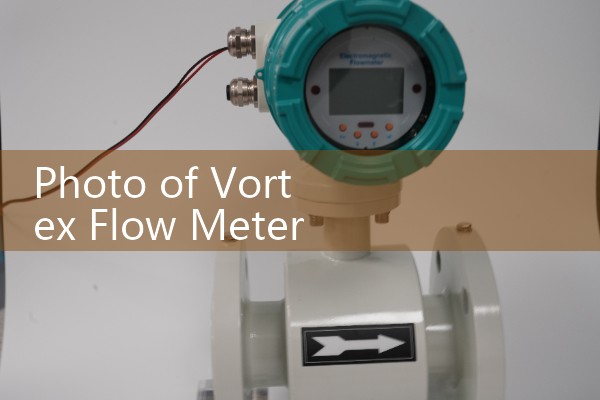
『Photo of vortex flowmeter probe』Related information(v cone flow meter|rotary gas meter|gallon meter|gear meter|metal tube rotameter|glass tube rotameter|nutating disk meter|transit time ultrasonic flow meter|wedge flow meter|pd meters|hydraulic flow meter|ultrasonic water flow meter|water flow meter|air flow meter|magnetic water flow meter|oxygen flow meter|gas flow meter|argon flow meter|air velocity meter|gasoline flow meter|fuel flow meter|ultrasonic water meter|digital water meter|nitrogen flow meter|solid flow meter|Oxygen tank flow meter|digital water flow meter|diesel fuel flow meter|steam flow meter|02 flow meter|compressed air flow meter|oil flow meter|liquid flow meter)
1.1 minutes to understand the working principle of vortex flowmeter
The working principle of vortex flowmeter is based on the "Karman vortex street" principle. The following is a detailed explanation of its working principle:
First, the basic principle of the vortex flowmeter is a fluid oscillation type flow meter developed based on the "Karman vortex street" principle, which has excellent technical performance indicators. When fluid flows through a non streamlined cylindrical object (vortex generator) inserted into the sensor housing, two columns of staggered vortices will be generated on both sides behind the cylinder. The separation frequency of these vortices is proportional to the flow velocity and inversely proportional to the width of the cylinder.
2. The relationship between vortex separation frequency and flow velocity. The frequency f of vortex separation can be expressed by the following formula: f=St × V/d, where f is the vortex separation frequency; St is a dimensionless constant (Strouhal number), which is a function of Reynolds number Re within a certain flow range for a specific type of vortex generator; V is the average flow velocity of the fluid inside the pipeline; D is the width of the upstream face of the cylinder; D is the inner diameter of the sensor housing (this parameter is not directly reflected in the formula, but affects the relationship between St and Re). By detecting the separation frequency f, the fluid flow velocity and instantaneous flow rate can be measured.
III. Calculation of Instrument Coefficient The number of pulses generated by the flow of fluid through a sensor per unit volume is called the instrument coefficient, represented by K. The instrument c
2. Swiss E+H Endershause Vortex Flow Meter F 200, 7F2C80, DN80 3 "Introduction
Swiss E+H Endershause Vortex Flow Meter F 200, 7F2C80, DN80 3" Introduction: Swiss E+H En