

 Current position >About Us
Flow Meter in Hospital Pipelines: Monitoring Medical Gas Infrastructure Deliveries
Quick Answer: For hospital medical gas pipelines, a thermal mass flow meter is usually the best solution. It measures oxygen, medical air, nitrous oxide, and carbon dioxide directly by mass flow without separate pressure or temperature compensation. Silver Instruments supplies inline thermal mass flow meters for DN15 to DN50 lines with 4-20 mA HART output and a local display.
Why Hospitals Monitor Medical Gas Flow
Hospital pipelines deliver oxygen, medical air, nitrous oxide, carbon dioxide, and vacuum at stable pressure. A small leak or a blocked filter can change the flow without a clear alarm. In practice, facility teams monitor flow at central plants, ward risers, and operating theaters. The data helps detect leakage, track consumption by department, and verify that backup manifolds switch correctly.
Many hospital projects now ask for flow metering on each main pipeline, not only at the gas source. For example, a 400 bed hospital in Vietnam installed flow meters on oxygen risers for 12 floors. The facility team found a leak of 1.8 kg/h on a DN25 oxygen branch within the first week. Without flow data, the leak could have run for months.
Which Flow Meter Works for Medical Gas
Most engineers skip general purpose rotameters for hospital oxygen and medical air because accuracy is low and data output is missing. Thermal mass flow meters are the normal choice for dry, clean medical gases. They measure mass flow directly in kg/h or standard litres per minute. They work on DN15, DN20, DN25, DN40, and DN50 lines. They do not need external pressure and temperature sensors for gas flow correction.
Ultrasonic flow meters can be used on larger oxygen mains, but they are often more expensive for small hospital branch lines. Coriolis mass flow meters are highly accurate, but the cost is hard to justify outside research or central plant use. Vortex flow meters can work, but low flow sensitivity may be an issue when demand drops at night. So thermal mass flow is the safe starting point for most hospital pipeline metering.
Recommended Silver Instruments Configuration
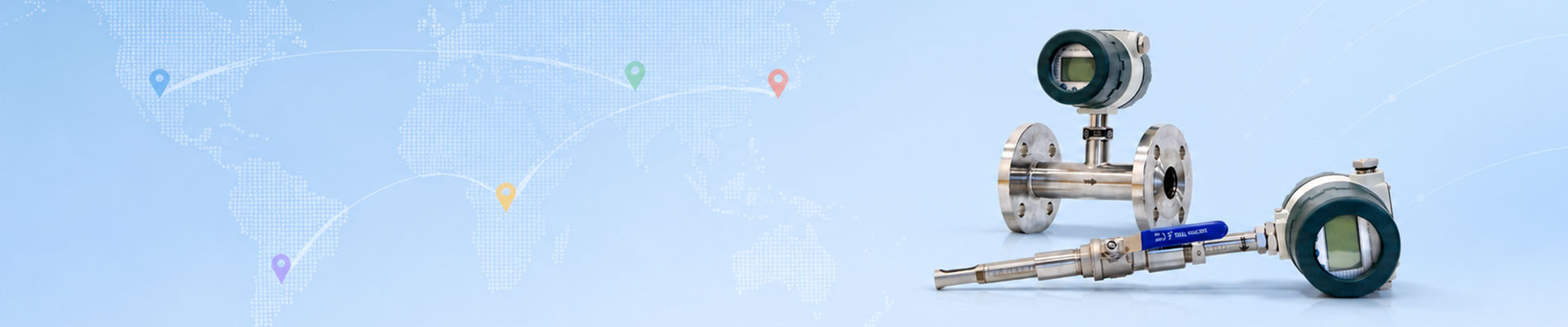
Silver Automation Instruments supplies a thermal mass flow meter range for medical gas service. The typical model is the SAI-TMF series. For oxygen, medical air, and nitrogen lines up to DN50, we recommend an inline version with PT100 temperature sensing, 4-20 mA HART output, and a local LCD display. The flow range can be set from 0.5 to 50 standard litres per minute for small branches or up to 200 kg/h for main headers.
For nitrous oxide and carbon dioxide, the same meter body works if the wetted materials are clean and the calibration gas is specified. You need to tell us the gas type, pressure, temperature, pipe size, and flow range. Send these values to Silver Instruments. Tel: +86-25-68650347, WhatsApp: +86-25-52155837, WeChat: +86 15365082610. We will confirm model number, process connection, output, and calibration before quotation.
Installation and Data Output in Hospital Pipework
Install the flow meter downstream of filters and pressure regulators. Keep straight pipe length as per the manual. For DN15 and DN20 lines, 10 times pipe diameter upstream and 5 times downstream is usually enough. Avoid installing directly after a valve that opens and closes fast. The flow signal can go to the building management system through 4-20 mA HART. In many hospitals, the same signal feeds a nurse alarm panel or a central gas monitoring display.
We have seen customer sites use the totalizer function to compare weekly oxygen use between wards. That data helps with cylinder billing, bulk tank reconciliation, and leak reporting. One customer in the Philippines used the flow meter totalizer to catch a medical air leak of 6 kg/h on a DN40 line. The leakage appeared only during low demand periods