

 Current position > Product detail
『Condensate Oil Flow Meter High-Pressure Separation Setup』Related information(v cone flow meter|rotary gas meter|gallon meter|gear meter|metal tube rotameter|glass tube rotameter|nutating disk meter|transit time ultrasonic flow meter|wedge flow meter|pd meters|hydraulic flow meter|ultrasonic water flow meter|water flow meter|air flow meter|magnetic water flow meter|oxygen flow meter|gas flow meter|argon flow meter|air velocity meter|gasoline flow meter|fuel flow meter|ultrasonic water meter|digital water meter|nitrogen flow meter|solid flow meter|Oxygen tank flow meter|digital water flow meter|diesel fuel flow meter|steam flow meter|02 flow meter|compressed air flow meter|oil flow meter|liquid flow meter)
Condensate Oil Flow Meter in High-Pressure Separation: A Practical Setup Guide
Quick Answer: A condensate oil flow meter on a high‑pressure separator must handle gas carry‑under, pressure shocks, and varying phase fractions. The safe pick is a Coriolis mass flow meter rated for the separator’s design pressure. It gives you mass flow and density in one device, so you know exactly how much condensate leaves the vessel.
You will find this setup on gas processing sites all over Southeast Asia, the Middle East, and offshore Australia. High‑pressure separators take raw wellstream at 80 bar to 140 bar and split it into gas, water, and condensate. The condensate leg carries hydrocarbon liquid with small amounts of entrained gas. A flow meter that misreads that gas as liquid volume overstates production. A Coriolis meter does not care about bubbles. It measures mass directly.
Here is the thing. Most engineers skip the location check and bolt the meter anywhere downstream of the separator level control valve. In practice, that valve dumps condensate into a lower‑pressure system and creates intense flashing. Flashing kills accuracy on any meter type. We have seen this on customer sites many times. A refinery in Vietnam put a Coriolis meter right after the dump valve. The meter reported negative density spikes because of transient gas breakout. They moved the meter upstream of the valve, close to the separator nozzle, and the reading stabilized within two hours.
Why a Coriolis Mass Flow Meter Fits This Job
Condensate API gravity changes from well to well. One separator might see 55 °API, the next one 40 °API. A volumetric meter such as a turbine or oval gear needs a compensation factor each time the composition shifts. A Coriolis mass flow meter from Silver Automation Instruments gives you mass flow in kg/h and live density in kg/m³ simultaneously. So you get corrected volume at standard conditions without an external densitometer.
Pressure ratings matter. Separators often run at 100 bar with a design pressure of 150 bar. We supply Coriolis meters with PN100 and PN160 flanges in DN15 to DN80. The wetted material is usually 316L stainless steel. For higher H₂S content, we offer NACE MR0175 compliant Hastelloy C22 sensors. Temperature tolerance is straight‑forward. Most condensate streams stay between 40 °C and 90 °C, well within the standard 150 °C limit.
Mounting Rules That Reduce Headaches
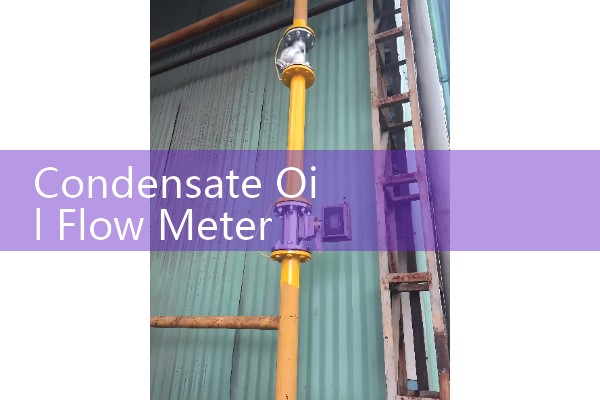
Keep the meter close to the separator liquid outlet. Short, straight pipe runs upstream and downstream are enough. Vertical installation with flow upward is the safest layout. Any entrained gas rises through the meter instead of accumulating. Install a small vapor return line if you have a continuous gas carry‑under problem. We have done this on an FPSO project off West Africa. The meter ran stable from day one.
Do not place the meter downstream of a level control valve without a pressure‑break analysis. If the valve drops pressure by more than 30 percent of the upstream pressure, flashing is likely. In that case, mount the meter upstream. If you must put it downstream, specify a backpressure regulator to keep the liquid above its bubble point.
Avoid liquid hammer. High‑pressure separators use quick‑acting dump valves. The sudden stop of flow sends a pressure wave that can bend Coriolis tubes. A small pulsation dampener or a flow‑straightenin
Signal and Hazardous Area Setup
Most high‑pressure separator skids sit in ATEX Zone 1 or IECEx Zone 1. The Coriolis transmitter must carry Ex d or Ex ia certification. Silver Instruments transmitters output 4‑20 mA HART for mass flow, density, and temperature. We also provide Modbus RTU and pulse output. Temperature measurement is integrated into the sensor tube using a PT100 element. That means one device replaces a flow meter, a densitometer, and a temperature probe on the condensate line.
Data logging is part of the package. Many operators in Qatar and Oman connect our meter to a paperless recorder for custody‑transfer verification. The recorder archives mass flow total, density, and temperature every second. You can pull reports for the whole production shift without touching a laptop.
Real Numbers From a Customer Site
Last year a customer in Indonesia asked us for a condensate meter on a 120‑bar high‑pressure separator. Condensate flow ranged from 800 kg/h to 4 200 kg/h. Fluid temperature was 70 °C. They needed custody‑transfer accuracy of 0.2 percent of rate. We proposed a Silver Instruments CMF025 Coriolis meter with DN25 PN160 flanges, 316L sensor, and Ex d transmitter. The meter went into service and has maintained zero drift for over 12 months. Their production accounting team now sees daily mass balances that close within 0.3 percent.
Get a Quote With Your Exact Numbers
Send us your pressure in bar, temperature in °C, pipe size in DN, and flow range in kg/h or tonnes per day. We will pick the right Coriolis meter from the Silver Automation Instruments range and return a datasheet and price the same working day. The information goes to [email protected]. We ship to Jakarta, Dammam, Lagos, Lima, and 60 other locations without delays.
FAQ
What is the minimum flow a Coriolis meter can measure on a high‑pressure condensate line?
A DN15 meter will read down to about 50 kg/h with good accuracy. Below that, the density signal weakens. For low‑flow applications, contact our team with the actual turndown, and we will run a sizing check.
Can I use a vortex flow meter instead?
Vortex meters work on dry gas or superheated steam. On condensate with occasional gas slugs, the bluff body loses its shedding signal, and the meter goes to zero or reports false peaks. Coriolis is far more reliable for this service.
Do I need straight pipe runs for a Coriolis meter on a separator skid?
No. Coriolis meters do not need long upstream or downstream straight runs. You can mount the meter right at the separator nozzle if the mechanical supports are adequate.
How do I avoid wax or paraffin buildup in the sensor tubes?
If the condensate has a wax appearance temperature above 30 °C, use a steam‑jacketed meter or electric heat tracing. Silver Instruments offers both options on the same sensor body.
What is the price range for a high‑pressure Coriolis condensate meter?
Prices depend on size, pressure rating, and certifications. A DN25 PN100 meter with standard 316L and Ex d transmitter typically sits in the mid‑four‑digit USD range. Send your full specifications for a precise quote.