

 Current position > Product detail
『Solid Flow Meter: Bulk Dry Particulate Gravimetric Chute Systems』Related information(v cone flow meter|rotary gas meter|gallon meter|gear meter|metal tube rotameter|glass tube rotameter|nutating disk meter|transit time ultrasonic flow meter|wedge flow meter|pd meters|hydraulic flow meter|ultrasonic water flow meter|water flow meter|air flow meter|magnetic water flow meter|oxygen flow meter|gas flow meter|argon flow meter|air velocity meter|gasoline flow meter|fuel flow meter|ultrasonic water meter|digital water meter|nitrogen flow meter|solid flow meter|Oxygen tank flow meter|digital water flow meter|diesel fuel flow meter|steam flow meter|02 flow meter|compressed air flow meter|oil flow meter|liquid flow meter)
Solid Flow Meter: Bulk Dry Particulate Gravimetric Chute Systems
Quick Answer: A gravimetric chute solid flow meter measures the mass flow of free-falling dry powders, granules, and pellets directly in a vertical process line. It uses an impact plate and a precision load cell to deliver real-time kg/h or t/h data with no moving parts in the material stream. For cement, flour, plastic pellets, or mineral sands, Silver Instruments supplies compact inline meters that start at DN50 process connections and support 4-20 mA HART, Modbus RTU, and optional ATEX Zone 20 dust certification.
Most engineers skip a crucial point when they first look at solids flow measurement. They try to adapt a continuous weighing feeder or a belt scale to a chute where space is tight and the material is already in free fall. Here is the thing. A gravimetric chute sensor does not replace a feeder. It measures what is already moving. The sensor body installs between two flanges in a vertical downcomer. Dry bulk material strikes an angled impact plate. A single-point load cell behind that plate converts the horizontal force component into a mass flow signal. The built-in microprocessor compensates for friction, temperature drift, and minor density changes. The output is a true mass flow rate, not an inferred volume.
Silver Instruments has supplied these meters to a cement grinding plant in Mindanao, Philippines that needed to totalize raw meal feeding to a preheater tower. The chute was only 600 mm long, DN200, with material temperatures up to 110 °C. A standard impact plate with ceramic-coated wear liner handled 80 t/h of abrasive limestone powder. The plant integrated the 4-20 mA signal into their existing Yokogawa DCS without any extra signal conditioner. Accuracy held at ±0.5 % of full scale over six months before the first planned zero check.
Where a gravimetric chute meter fits and where it does not
Solid flow meters built around the impact plate principle work best on free-flowing dry particulates. Think cement, sand, plastic granules, wheat, soybean meal, alumina, or fly ash. The particle size can range from fine dust (10 µm) up to 25 mm lumps as long as the material does not stick. They do not suit moist, cohesive powders that build up on the sensing plate. In those cases, a Coriolis mass flow meter for liquids or a thermal mass flow meter for gas would be the wrong tool entirely. For sticky solids, a loss-in-weight feeder or a bin weigh system still wins.
A recent customer in Peru asked us to measure dried copper concentrate in a 12 m high enclosed chute. Abrasion was extreme. We supplied a heavy-duty impact plate with tungsten carbide tiles and a purge air system to keep dust away from the load cell housing. The meter body was flanged DN150 with a purge air pressure of 0.2 bar. The output went to a PLC via Modbus RTU. The site reported zero unplanned downtime in the first eight months of operation.
Signal processing and environmental ruggedness
The raw impact signal is noisy. A 32-bit ARM-based integrator inside the meter runs a proprietary damping algorithm tuned to the expected mass flow range. Output options include 4-20 mA HART, RS485 Modbus RTU, or Profibus DP. For hazardous areas, Silver Instruments can supply ATEX Category 2D or 3D certification for Zone 21 or Zone 22 dust atmospheres. The enclosure is cast aluminum with IP66 rating as standard. Process temperature can reach 150 °C if the load cell is thermally isolated. Ambient temperature limits are -20 °C to +60 °C.
One maintenance detail many spec sheets omit. The zero calibration must be done with an empty chute and no material residue on the plate. In practice, a quick blow-down with instrument air once a week prevents buildup. The factory sets a default damping of 2 seconds, but you can adjust it from
Installation spool and process connection
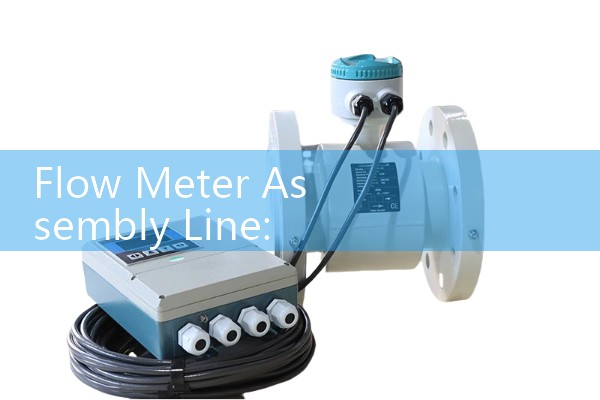
The meter comes as a complete assembly with inlet and outlet flanges. Standard sizes range from DN50 to DN300. Flow rates as low as 50 kg/h up to 600 t/h are measurable. The inlet should have a straight vertical run of at least 500 mm above the meter. We recommend a rotary valve or screw feeder directly above if your process already uses one. Do not place the meter after a diverter valve that introduces a sharp offset trajectory. The impact plate needs a consistent impact point.
We often ship a calibration weight kit with each meter. A known mass hangs from a lever arm to simulate a flow impact. This lets your maintenance team verify the span without process material. For sites in the Middle East where ambient temperatures exceed 50 °C, we pre-age the load cell and provide a thermal compensation certificate.
Integration with Silver Instruments product line
Silver Automation Instruments can package the solid flow meter with a companion paperless recorder for data logging and batch reports. If the same plant also measures liquid additives, our oval gear flow meters for viscous fluids or Coriolis mass flow meters for bulk liquids share the same Modbus register layout. This simplifies PLC coding. For custody transfer of bulk solid shipments, pair the chute meter with a weighbridge and a totalizer display. Many of our distributors in East Africa and Latin America stock the DN100 and DN150 models for quick delivery.
Get a specific recommendation and price. Send us your bulk material type, expected flow range in kg/h or t/h, particle size distribution, chute diameter, process temperature, and the required signal output (4-20 mA HART or Modbus). Reach Silver Instruments by Tel: +86-135-1213-1526, WhatsApp: 86-135-12131526, or WeChat: +86 13512131526. Our applications team typically responds with a dimensional drawing and a datasheet within 24 hours.
Frequently Asked Questions
Can a gravimetric chute meter handle abrasive materials like bauxite or clinker?
Yes. We offer abrasion-resistant impact plates with ceramic, chromium carbide, or tungsten carbide facing. Regular inspection and plate replacement are part of maintenance. A customer in Mozambique measures 200 t/h of hot clinker at 120 °C using a DN250 meter with a carbide plate and thermal shield.
What is the minimum measurable flow rate?
The minimum depends on chute size and bulk density. For light-density powders like fumed silica at 50 kg/m³, a smaller DN50 meter can measure down to 80 kg/h. For heavy materials like iron ore concentrate, the same meter measures up to 15 t/h. The turndown ratio is typically 10:1.
Does the meter need regular recalibration?
Zero checks are recommended weekly if the material is sticky. A span calibration using the weight kit can be done monthly. No process interruption is needed for the zero check if you can isolate the chute.
Can I use this meter for food-grade applications?
Yes, we supply versions with 304 or 316L stainless steel contact parts and FDA-approved seals. The impact plate can be polished to Ra 0.8 µm. Common applications include sugar, flour, salt, and coffee beans. Provide your clean-in-place requirements for a custom design.
What is the pressure rating?
Standard meters are designed for atmospheric or slight negative pressure down to -50 mbar. For pneumatic conveying lines with positive pressure up to 0.8 bar, we add a reinforced housing and a pressure-tight cable gland. Specify the line pressure early in your inquiry.