


 Current position > Product detail
『Measurement principle of electromagnetic flowmeter』Related information(v cone flow meter|rotary gas meter|gallon meter|gear meter|metal tube rotameter|glass tube rotameter|nutating disk meter|transit time ultrasonic flow meter|wedge flow meter|pd meters|hydraulic flow meter|ultrasonic water flow meter|water flow meter|air flow meter|magnetic water flow meter|oxygen flow meter|gas flow meter|argon flow meter|air velocity meter|gasoline flow meter|fuel flow meter|ultrasonic water meter|digital water meter|nitrogen flow meter|solid flow meter|Oxygen tank flow meter|digital water flow meter|diesel fuel flow meter|steam flow meter|02 flow meter|compressed air flow meter|oil flow meter|liquid flow meter)

The working principle of the plug-in electromagnetic flowmeter is based on Faradays law of electromagnetic induction, and its core is to calculate the flow rate by measuring the induced electromotive force generated by the movement of a conductive fluid in a magnetic field. The following is a detailed explanation of the specific principle: Basic formula: According to Faradays law of electromagnetic induction, when a conductive medium (such as a liquid) cuts a magnetic induction line vertically at an average flow velocity ν, the induced electromotive force E generated between the two electrodes can be expressed as: E=B × L × ν, where: E: Induced electromotive force (unit: volt, V) B: Magnetic excitation induction intensity (unit: Tesla, T) L: Effective length of the cut magnetic induction line (unit: meter, m) ν: Average flow velocity of the fluid (unit: meter/second, m/s) The relationship between flow velocity and flow rate: When the magnetic field intensity B and effective length L are constant, the induced electromotive force E is... The flow velocity is directly proportional to. By measuring E, the average flow velocity of the fluid can be directly obtained. If the cross-sectional area A of the tested pipeline is known (which can be calculated by the inner diameter D of the pipeline, A=π D2/4), the volumetric flow rate Qv (unit: cubic meter/second, m3/s) can be expressed as: Qv=A × ν=(π D2/4) × (E/BL). After further simplification (when the insertion structure is fixed, L is related to the inner diameter D of the pipeline), the relationship between volumetric flow rate and induced electromotive force can be expressed as: Qv=K × E, where K is a constant and is related to parameters such as magnetic field strength a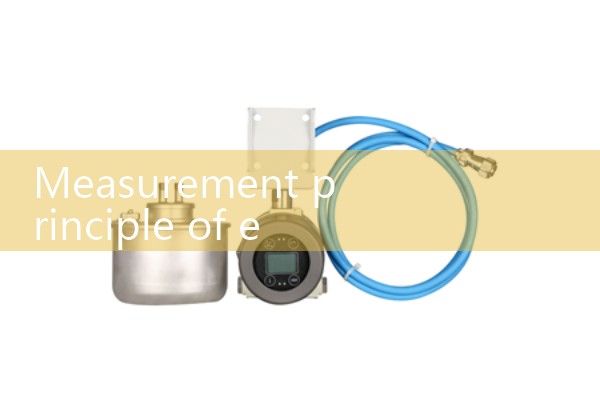
2. Principle of Electromagnetic Flow Meter
The basic principle of electromagnetic flow meter is based on Fara