

 Current position > Product detail
『Essential Oil Flow Meter Micro-Dosing Valve Integration』Related information(v cone flow meter|rotary gas meter|gallon meter|gear meter|metal tube rotameter|glass tube rotameter|nutating disk meter|transit time ultrasonic flow meter|wedge flow meter|pd meters|hydraulic flow meter|ultrasonic water flow meter|water flow meter|air flow meter|magnetic water flow meter|oxygen flow meter|gas flow meter|argon flow meter|air velocity meter|gasoline flow meter|fuel flow meter|ultrasonic water meter|digital water meter|nitrogen flow meter|solid flow meter|Oxygen tank flow meter|digital water flow meter|diesel fuel flow meter|steam flow meter|02 flow meter|compressed air flow meter|oil flow meter|liquid flow meter)
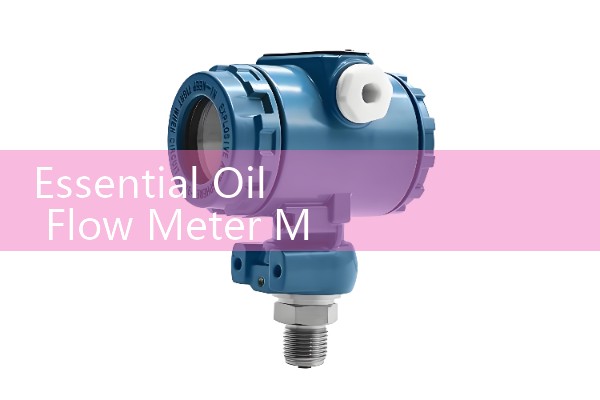
Essential Oil Flow Meter and Micro-Dosing Valve Integration for Precision Filling
For dosing essential oils into small vials, a Coriolis mass flow meter combined with a fast-responding micro-dosing valve provides mass-based filling independent of oil temperature and viscosity. Silver Instruments supplies compact Coriolis meters starting at DN1.5 that pair with third-party valves to achieve individual fill volumes as low as 0.5 ml and a dosage repeatability of ±0.2 % of mass.
Why Mass Flow Measurement Wins Over Volume for Essential Oils
Essential oils change density with temperature and batch. A peppermint oil at 25 °C has a density near 0.90 kg/L, while a thick patchouli oil can reach 0.97 kg/L. Volumetric meters drift with these shifts. A Coriolis meter directly measures mass flow in kg/h or g/min. It ignores density, viscosity, and entrained micro bubbles. In practice, this means your 10 ml bottle always receives 9.0 grams of lavender oil, not 9.5 grams one day and 8.8 grams another day.
How a Coriolis Meter and Micro-Dosing Valve Work Together
We often see installations where a DN1.5 Coriolis sensor sits directly before a pneumatic or solenoid micro-dosing valve. The flow meter outputs a 4-20 mA HART signal or a high-speed pulse train (up to 10 kHz) to a PLC or batch controller. When the totalized mass reaches the target, the controller closes the valve. Some high-speed systems use a pulse-per-gram approach: the meter sends one pulse for every 0.01 gram, and the valve cuts off after exactly 500 pulses for a 5 gram fill. A Vietnamese aroma oil producer uses this method to fill 5000 bottles per day with less than 0.1 gram variation per bottle.
A critical part is connecting the meter output to the valve driver. If your valve opens and closes in under 15 ms, you can stop filling within ±1 pulse. This makes the integration work. Silver Instruments Coriolis meters for micro-dosing, model ACM-2, come with a configurable pulse output scalable from 0.001 g/pulse up to 0.1 g/pulse. The meter wetted parts are 316L stainless steel with a PTFE lining option for aggressive oils like cinnamon bark. Process connections are 1/4 inch compression fittings or DN2 sanitary tri-clamp.
Choosing the Right Meter Size Based on Your Fill Volume and Speed
For target fills from 1 ml to 20 ml at speeds up to 60 bottles per minute, a DN1 meter rated 0.05 to 3 kg/h works. For 20 ml to 100 ml fills, a DN2 meter covering 0.5 to 20 kg/h fits. For larger doses like 200 ml into mixing tanks, a DN3 or DN6 meter is standard. Always match the meter full scale to your peak flow, not average flow. A customer in South Africa filling 50 ml beard oil bottles calibrated his DN2 meter at 6 kg/h peak flow. This gave him a 10 ms valve closure window and cycle-to-cycle repeatability of ±0.15 g.
Setting Pressure, Backpressure, and Avoiding Two-Phase Flow
Essential oils with high vapor pressure components, like tea tree oil,
How to Get a Quote from Silver Automation Instruments
Tell us your oil name, filling volume per cycle (ml or grams), required bottles per hour, oil viscosity in cP at filling temperature, and pipe connection preference (compression or tri-clamp). We will propose a Coriolis meter model, a compatible valve suggestion, and a wiring diagram for pulse-based batch control. Send these details to our technical sales team or use the inquiry form on flow-meter.com.au. We ship from our Australian warehouse to Singapore, Dubai, Jakarta, Mexico, and Lima within 7 working days for standard micro Coriolis meters.
Frequently Asked Questions
Q: Can a Coriolis flow meter measure essential oils with high viscosity like myrrh?
A: Yes. Silver Instruments ACM-2 micro Coriolis meters handle up to 2500 cP without losing accuracy. The vibrating tube design is insensitive to viscosity changes, unlike turbine or positive displacement meters that can slow down or require recalibration.
Q: What is the smallest volume a micro-dosing valve and Coriolis meter system can reliably fill?
A: With a DN1 meter and a fast 5 ms valve, we have seen customers fill 0.3 ml vials with a mass repeatability of ±0.005 g. The practical lower limit depends on valve response and pipe stiffness, not on the flow meter.
Q: Do I need an explosion-proof setup for essential oil filling?
A: Most pure essential oils do not form explosive atmospheres at room temperature. However, if your solvent carrier is ethanol or isopropyl alcohol at high concentrations, a Zone 2 ATEX-certified meter housing and valve coil are mandatory. Silver Instruments offers ATEX Zone 1 and Zone 2 options for Coriolis meters.
Q: How does the meter output communicate with a PLC for batching?
A: The meter provides a high-speed open collector pulse output. Each pulse equals a set mass unit. A PLC high-speed counter input captures pulses. At the preset count, the PLC output module de-energizes the valve solenoid. The process needs no analog scaling and avoids drift from 4-20 mA conversion.
Q: Can you supply a complete skid with meter, valve, and controller?
A: Silver Instruments focuses on flow meter supply. We will assist with valve selection and provide wiring examples. For a turnkey filling skid, we can recommend Australian and Southeast Asian system integrators who use our meters regularly.